
CRE-420 · Lesson 9 of 12 · 29 min
Travel, outdoors and adventure
Travel and outdoor creators show places, experiences and skills: city guides, budget travel, luxury travel, road trips, van life, hiking, camping, climbing, paddling, fishing, skiing and adventure sports. The niche combines strong visual appeal with practical value, because viewers plan real trips from what they watch. It also has distinctive challenges. Travel is expensive, so creators depend on partnerships with tourism boards, hotels, airlines and gear brands, which creates disclosure and independence issues. Outdoor content can encourage risky behavior or overcrowd fragile places. Filming in parks and protected areas can require permits, and drones are restricted. This lesson covers how travel and outdoor creators work and the rules and ethics that come with the niche.
Formats and audiences
Travel content ranges from destination guides and itineraries to personal travel diaries, food and culture explorations, budget tips and long-form documentary series. Outdoor content adds skills and safety: gear reviews, how-to guides, trip reports, route information and expedition storytelling. Audiences include people actively planning trips, armchair travelers watching for escape, and enthusiasts deepening their skills. Each group responds to different formats, and many creators combine inspiration with practical detail.
Local and regional channels can be very effective. A creator who knows their province, state or city deeply, such as the best day hikes near Calgary, accessible travel in Montreal or road trips through the American Southwest, can serve a loyal audience and attract regional tourism partners. Specialized angles such as accessible travel, travel with children, solo female travel, LGBTQ+ travel, Indigenous tourism or winter travel also find dedicated audiences.
How travel creators earn
Travel creators earn from ads, affiliates for hotels, tours, insurance and gear, sponsorships, and partnerships with destinations and hospitality brands. Tourism boards and destination marketing organizations often host creators on familiarization trips, sometimes called press trips or fam trips, covering travel and accommodation and sometimes paying a fee. Hotels and tour operators offer complimentary stays and experiences. Gear brands sponsor outdoor creators and provide equipment.
| Partnership type | What the creator receives | Disclosure needed |
|---|---|---|
| Tourism board hosted trip | Flights, accommodation, activities, sometimes a fee | Yes: disclose the host and what was covered |
| Complimentary hotel stay | Free nights or upgrades | Yes |
| Affiliate booking links | Commission on bookings | Yes |
| Gear sponsorship | Free gear, fees or both | Yes |
| Self-funded trip | Nothing from businesses featured | No, though saying so builds trust |
Worked problem
Working out whether a trip pays
A creator plans a self-funded trip costing $3,200 in flights, accommodation and activities. They expect four videos averaging 45,000 views each at an RPM of $6, plus $500 in booking affiliate commissions. Alternatively, a tourism board offers to cover all costs and pay a $1,500 fee for three videos. Compare the two.
Show solution
- Self-funded ad revenue: 4 × 45,000 ÷ 1,000 × $6 = $1,080.
- Self-funded total revenue: $1,080 + $500 = $1,580. Net: $1,580 − $3,200 = −$1,620 (a loss).
- Hosted trip: costs covered, $1,500 fee, plus ad revenue on three videos of about 3 × 45,000 ÷ 1,000 × $6 = $810. Net: about $2,310.
Answer: The self-funded trip loses about $1,620 in the short term, while the hosted trip nets about $2,310. Hosted trips make the economics work, which is why disclosure and editorial independence are so important in this niche.
Self-funded content can still make sense over time, because evergreen travel guides continue to earn for years and build credibility. Many creators mix hosted and self-funded trips and are open with their audience about which is which.
Disclosure and editorial independence
Hosted trips are material connections. Viewers need to know when a destination, hotel or tour operator paid for the experience, because it may affect what the creator shows and how they describe it. Disclosure should be clear and early in the content, not only in the description, and should name who hosted the trip. Saying this trip was hosted by the regional tourism board, which covered my flights and hotels, but all opinions are my own is a common and effective form.
Independence matters as much as disclosure. Tourism partners sometimes ask for approval rights, positive-only coverage or specific messages. Creators should agree in writing what deliverables are expected, whether partners can review content, and that honest opinions will be shared. Showing a hotel's real problems, such as noise, broken facilities or misleading photos, protects viewers and the creator's credibility. Creators who become known for only positive hosted content lose trust over time.
In the United States, the FTC's Endorsement Guides apply to hosted trips and free products: an influencer who receives a free stay or trip has a material connection that must be clearly disclosed. The FTC's rule on fake reviews and testimonials, in force since October 2024, prohibits fake reviews and buying or selling reviews, which affects creators who post on booking and review sites.
Safety and responsible adventure
Outdoor and adventure content can inspire viewers to attempt activities beyond their skills. People have been injured and killed recreating viral photos at cliff edges, waterfalls and wildlife encounters, and search and rescue teams have reported rescues of hikers who followed social media routes unprepared. Responsible creators show preparation as well as the highlight: the gear, training, weather checks, permits, route planning and turnaround decisions behind a trip.
- Show preparation: gear, skills, weather and route planning, not just the summit view.
- State difficulty and risks honestly, including when a route requires experience or guides.
- Avoid encouraging copycat stunts at dangerous viewpoints or cliff edges.
- Model safe wildlife behavior: keep distance, never feed animals and follow park rules.
- Share avalanche, water and fire safety resources where relevant.
Liability is also a consideration. If a creator leads paid trips, workshops or guided outings, they take on duties of care and may need guiding certifications, permits, waivers and insurance. In Canada, guiding in national parks requires a business license, and in the United States, guiding on federal land requires a commercial use authorization or permit.
Leave No Trace and overtourism
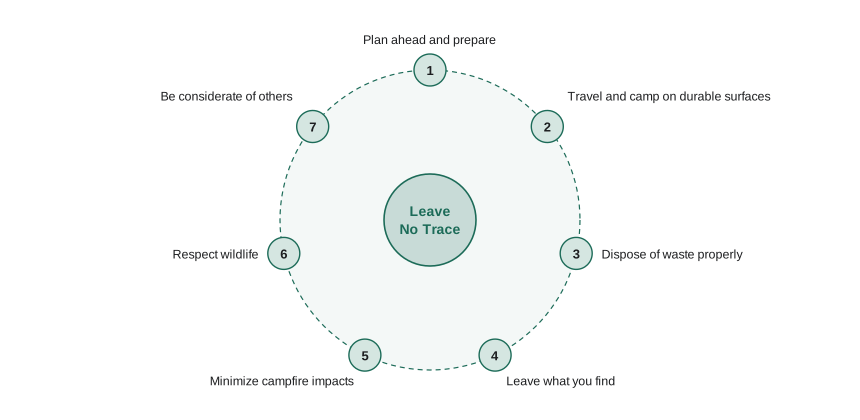
Social media has contributed to overcrowding at some popular sites. Locations shared widely can see sudden surges in visitors, trail damage, litter, parking problems and pressure on local communities and wildlife. The Leave No Trace principles, promoted by Leave No Trace Canada and the Leave No Trace Center for Outdoor Ethics in the United States, offer a framework for responsible content: plan ahead and prepare, travel and camp on durable surfaces, dispose of waste properly, leave what you find, minimize campfire impacts, respect wildlife, and be considerate of others.
Some creators choose not to geotag sensitive locations, especially fragile or little-known spots, and instead tag a general area or encourage viewers to research responsibly. Showing respect for Indigenous lands, sacred sites and local communities is also part of responsible travel content. Many destinations now ask visitors and creators to follow specific codes of conduct.
Filming in parks and protected areas
Commercial filming in parks and protected areas can require permits, and the rules differ by country, agency and park. Creators who earn money from their content should check whether their filming counts as commercial and what permits apply before they go.
In the United States, filming rules on federal lands changed with the EXPLORE Act, signed in January 2025. Under it, small crews of five or fewer people filming commercially on National Park Service and other federal lands generally no longer need a permit or pay a location fee, provided they meet conditions such as not disturbing resources or other visitors and not needing exclusive use of an area; larger productions still need permits. Check current agency guidance, as implementation continues. Drones remain prohibited in national parks except with special authorization, and FAA Part 107 rules apply wherever drones fly. State parks set their own rules.
Drone footage is popular in travel content but heavily restricted. CINE-410 covers drone rules in detail. In travel content specifically, common problems include flying in parks where drones are banned, near wildlife, over crowds or near airports. Breaking these rules can lead to fines, confiscated equipment and lasting damage to a creator's reputation.
Sustainability and honesty in travel content
Travel has environmental costs, especially flights. Some audiences value creators who acknowledge this, choose lower-impact options where practical, travel slowly, or focus on nearby destinations. Environmental claims in travel, such as eco-lodge, carbon neutral or sustainable tourism, are subject to the same green claims rules covered in CRE-320. Ask partners for evidence before repeating such claims.
Worked problem
Estimating trip emissions honestly
A creator compares a return flight of 2,000 km each way with a train trip. Using illustrative factors of 0.15 kg CO2e per passenger-kilometer for flying and 0.04 kg for rail, estimate each trip's emissions for one person.
Show solution
- Total distance: 2 × 2,000 = 4,000 km.
- Flight: 4,000 × 0.15 = 600 kg CO2e.
- Train: 4,000 × 0.04 = 160 kg CO2e.
- Difference: 600 − 160 = 440 kg CO2e.
Answer: The flight produces about 600 kg CO2e against about 160 kg for the train, using illustrative factors. Sharing estimates with stated assumptions is more honest than unsupported claims that a trip was carbon neutral.
Honesty also means showing travel as it really is. Edited content can make destinations look empty, perfectly sunny and effortless. Showing crowds, costs, weather and difficulties gives viewers realistic expectations, reduces disappointment and builds trust, and it is often more interesting.
Travel insurance, safety and honesty about risk
Travel creators often promote travel insurance through affiliate programs. Insurance products have specific rules: in Canada, insurance is regulated provincially and selling or advising on insurance generally requires a license, while in the United States, states license insurance producers. Creators can share their own experience and link to providers, but should avoid presenting themselves as insurance advisers, describing coverage inaccurately or implying that a policy covers situations it excludes. Encouraging viewers to read policy terms is good practice.
Safety information is also part of honest travel content. Government travel advisories, such as those from Global Affairs Canada and the US Department of State, health requirements such as vaccinations, and local laws on photography, drones and dress codes all affect viewers' trips. Creators who mention these, and who are clear when a place or activity carries real risk, serve their audience better than those who present every destination as effortless.
Worked problem
Weighing a gear sponsorship
An outdoor creator is offered $800 and a $600 tent to feature the tent in two videos. The creator's usual sponsorship rate is $15 CPM and the two videos are expected to get 30,000 views each. How does the offer compare with the usual rate?
Show solution
- Expected views: 2 × 30,000 = 60,000.
- Usual rate value: 60,000 ÷ 1,000 × $15 = $900.
- Offer value: $800 cash plus a $600 tent = $1,400 in total, but only $800 in cash.
Answer: The offer is worth $1,400 including the tent, or $800 in cash against the usual $900. Whether to accept depends on whether the creator needs the tent and genuinely likes it. The tent itself is a material connection that must be disclosed.
Common mistakes
MistakeDisclosing hosted trips only in the description.
InsteadDisclose the host and what was covered clearly and early in the content itself.
MistakeLetting partners approve or censor reviews.
InsteadAgree in writing on deliverables and on honest opinions.
MistakeShowing risky viewpoints and stunts without context.
InsteadShow preparation, state risks honestly and avoid encouraging copycat behavior.
MistakeGeotagging fragile, little-known locations.
InsteadTag general areas and follow Leave No Trace principles.
MistakeFlying drones in national parks without authorization.
InsteadCheck park and aviation rules; recreational drones are banned in national parks in both countries.
Summary and key terms
- Travel and outdoor content combines inspiration with practical trip planning value.
- Creators earn from ads, affiliates, sponsorships and hosted trips from tourism boards and hospitality brands.
- Hosted trips and free stays are material connections that must be clearly disclosed.
- Editorial independence protects viewers and the creator's credibility.
- Responsible adventure content shows preparation, risks and safe wildlife behavior.
- Leave No Trace principles and careful geotagging reduce overtourism harms.
- Parks Canada and US federal agencies have specific rules for commercial filming and drones.
- Destination marketing organization
- A tourism board or agency that promotes a place to visitors.
- Fam trip
- A familiarization trip hosted by a destination or business for media and creators.
- Hosted trip
- Travel paid for wholly or partly by a destination, hotel or tour operator.
- Editorial independence
- The creator's freedom to share honest opinions without partner control.
- Leave No Trace
- A set of seven principles for minimizing impact on outdoor places.
- Overtourism
- Visitor numbers that exceed what a place can sustain.
- Geotag
- Location information attached to a post.
- Commercial filming permit
- Permission required to film commercially in certain parks and protected areas.
- EXPLORE Act
- A 2025 US law that changed commercial filming rules on federal lands.
- CO2e
- Carbon dioxide equivalent, a common unit for greenhouse gas emissions.
Practice problems
Work each problem on paper first, then reveal the answer to check.
Four videos of 30,000 views at RPM $5 earn what?
Show answer
$600.
A self-funded trip costs $2,500 and earns $1,400. Net result?
Show answer
A loss of $1,100.
How should a hosted trip be disclosed?
Show answer
Clearly and early, naming the host and what was covered.
Name three Leave No Trace principles.
Show answer
Plan ahead, travel on durable surfaces, dispose of waste, leave what you find, minimize fire impacts, respect wildlife, be considerate.
Why avoid geotagging fragile spots?
Show answer
Wide sharing can cause overcrowding and damage.
Can recreational drones fly in Canadian national parks?
Show answer
No, drone use requires specific Parks Canada authorization.
3,000 km at 0.15 kg CO2e per km is how much?
Show answer
450 kg CO2e.
What does a creator leading paid trips need to consider?
Show answer
Duties of care, certifications, permits, waivers and insurance.
Why show crowds and bad weather?
Show answer
It gives realistic expectations and builds trust.
What is a fam trip?
Show answer
A familiarization trip hosted by a destination or business.
Lesson quiz · 5 questions
Score 60% or more to complete this lesson.
Create a free account to save your progress, take quizzes and earn a certificate.