
CRE-201 · Lesson 3 of 12 · 25 min
Short-form video platforms
Short-form vertical video is the most recommendation-driven format online. On TikTok, Instagram Reels, YouTube Shorts, Facebook Reels and Snapchat Spotlight, most of what people watch comes from accounts they do not follow, chosen by systems that learn from every swipe. These platforms have made it possible for creators with no existing audience to reach millions, and they have also made reach volatile and highly dependent on the first seconds of each video. This lesson examines how short-form feeds work, the distinctive features of TikTok, Reels and Shorts, how videos are tested and expanded, the role of sounds and trends, length and format choices, cross-posting between platforms, and what these systems mean for creators' strategies.
How short-form feeds work
A short-form feed shows one video at a time, full screen, and the viewer decides with a swipe whether to stay or move on. Each swipe is a clear, immediate signal, and because people watch dozens or hundreds of videos in a session, the system collects enormous amounts of data quickly. This makes short-form recommenders very responsive: within minutes of opening an app, the feed adapts to what a person lingers on. For creators, it means that every video is judged almost instantly on whether viewers stop scrolling, how long they stay, whether they watch to the end or loop, and what they do afterward. The format rewards clear hooks, fast pacing, visual interest and satisfying payoffs.
Staged distribution
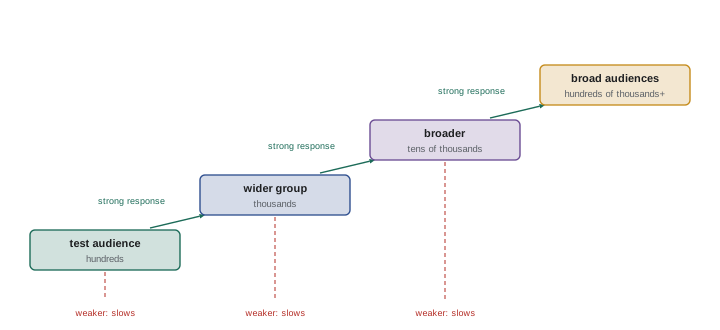
Short-form platforms typically distribute new videos in stages. A new post is first shown to a small set of viewers likely to be interested, often including some followers and some non-followers with related interests. If the video performs well relative to expectations for its type and audience, the system expands distribution to larger and broader groups; if not, distribution slows. This process can repeat many times, so a successful video may gain views over hours, days or occasionally weeks, and sometimes a video revives later when the system tests it with new audiences or when a topic becomes popular. Because performance is measured relative to expectations, the same view count can represent a big success for a small account and a disappointment for a large one.
TikTok
TikTok popularized the full-screen, interest-based For You feed. Its recommendation system has been described by the company as weighing user interactions such as likes, shares, comments, follows, watch time and completion, video information such as captions, sounds and hashtags, and device and account settings such as language and location, with stronger interest signals, such as watching a video to the end, counting more than weaker ones. TikTok has also said it diversifies recommendations to avoid repetitive feeds and limits certain categories of content in recommendations. Features important to creators include sounds and trends, duets and stitches that let creators respond to each other, photo carousels, longer videos, LIVE, search, and the TikTok Shop commerce features in supported countries. In the United States, a law passed in 2024 required ByteDance to divest TikTok's US operations; a new US joint venture was finalized in January 2026, with a licensed copy of the recommendation algorithm to be retrained and overseen in the US using US data. How the US system evolves, and how it differs from TikTok elsewhere, including in Canada, is worth monitoring.
Instagram Reels
Reels are Instagram's short-form format, appearing in a dedicated Reels tab, in the main feed and in Explore. Instagram has published explanations of how its different surfaces rank content, and its head, Adam Mosseri, has repeatedly said that for reaching people who do not yet follow you, sends via direct message and watch time are among the most important signals, while likes matter more for reaching existing followers. Instagram has said it favours original content over reposts and may reduce distribution of videos with visible watermarks from other apps. Features include remixes, templates, trending audio, collaborative posts that appear on two accounts, and trial reels, which let creators test a reel with non-followers before deciding whether to show it to their followers. Instagram extended maximum Reels length in 2025, and it increasingly emphasizes Reels and messaging as central to the app.
YouTube Shorts
Shorts are YouTube's vertical short-form format, shown in the Shorts feed, on the home page, in search and on channel pages. YouTube has extended the maximum length of Shorts to three minutes. Shorts can attract new viewers to a channel, and YouTube has said that Shorts and long-form views are handled by separate recommendation contexts, so that a channel's Shorts do not directly harm its long-form recommendations, though audiences who arrive via Shorts may behave differently from long-form viewers. YouTube offers features such as remixing clips from long videos, linking a Short to a related long video, and Shorts revenue sharing in the YouTube Partner Program. For creators with long-form channels, Shorts can serve as trailers and entry points to deeper content.
Facebook Reels and other platforms
Facebook has increased recommended content and Reels in its feed, using Meta's ranking systems shared with Instagram, and it pays some creators through performance-based programs. Snapchat Spotlight offers a recommendation feed of short videos with creator payments in some countries. Pinterest has video pins, and LinkedIn has expanded vertical video in its feed. Each platform's audience and culture differ: a video that suits TikTok's humour may not suit LinkedIn's professional audience, and Facebook's audience skews older than TikTok's. Creators should study the content that performs on each platform rather than assuming that all short-form feeds behave identically.
| Platform | Main short-form surfaces | Notable creator features |
|---|---|---|
| TikTok | For You, Following, search, LIVE | Sounds, duets, stitches, carousels, Shop |
| Reels tab, feed, Explore | Remixes, collabs, trial reels, templates | |
| YouTube | Shorts feed, home, search, channel | Remix from long videos, related video links |
| Feed, Reels, Watch | Monetization programs, Meta ranking | |
| Snapchat | Spotlight | Spotlight payments in some countries |
Sounds and trends
Sounds, including music clips, voiceovers and original audio, are central to short-form culture. Trending sounds can help videos reach people browsing content that uses them, and participating in trends connects a creator to a wider conversation. However, trends move quickly, and joining late or without adding anything distinctive rarely helps; the system still judges each video on viewer response. Original sounds can themselves become trends when other creators reuse them, crediting the original. Licensing matters: music available in a platform's library is licensed for use within that platform, often with restrictions for business accounts and branded content (CRE-130). Creators should check that sounds are licensed for their use, especially in sponsored posts.
Length, format and loops
Short-form lengths now range from a few seconds to several minutes, and each length suits different content. Very short videos, under 15 seconds, suit jokes, visual moments and loops; 20 to 60 seconds suits most tips, stories and demonstrations; one to three minutes suits detailed tutorials, storytelling and commentary, provided the pacing holds attention. Since retention is measured relative to length, a longer video must work harder to keep viewers. Loops, where the end flows seamlessly into the beginning, encourage rewatching. Carousels of photos, available on TikTok and Instagram, offer another format with different dynamics, rewarding swiping through slides.
Worked problem
Choosing a format for a tip
A personal finance creator wants to explain three ways to reduce bank fees. Should the content be a 20-second video, a 75-second video or a photo carousel, and why?
Show solution
- Three tips with brief explanations need more than 20 seconds to deliver real value; a 20-second version would feel rushed or vague.
- A 75-second video can open with the strongest tip as a hook, explain each tip clearly with on-screen text, and end with a summary that encourages saves.
- A carousel suits viewers who want to read at their own pace and save the information, and could be posted as a companion piece.
- Test both formats over time and compare retention, saves and shares relative to the creator's usual results.
Answer: A 60–90 second video with a strong opening tip suits the content, with a carousel as a complementary format for saving; test both.
Cross-posting short videos
Many creators post the same short video on several platforms. This saves time and reaches different audiences, but some care improves results. Upload clean files without another platform's watermark, since some platforms reduce distribution of visibly reposted content; adapt captions, hashtags and on-screen text to each platform's conventions and safe zones; use each platform's native features, such as licensed sounds, where possible; and watch analytics separately, because the same video can perform very differently on each platform. Some creators post a video first where it is most likely to perform and adapt it for others based on what they learn.
What short-form systems mean for creators
Short-form recommendation systems reward content that grabs attention immediately and holds it, but they also make reach unpredictable: a creator might see one video reach a million views and the next reach a few thousand. Strategies that cope with this include posting consistently to give the system many chances; developing formats and series that viewers recognize; studying retention data to improve hooks and pacing; balancing trend participation with original ideas; building relationships through comments and community so that followers engage; and directing interested viewers toward deeper content and owned channels such as newsletters (Lesson 12). Short-form reach is valuable but fragile, and creators should treat it as a way to be discovered rather than as the whole business.
What viewers do after the video
Short-form systems also consider what viewers do after watching. Visiting the creator's profile, watching more of their videos, following, or searching for related topics suggest deeper interest than a single view, and may help the system recommend more of the creator's content to that viewer and to similar people. Creators can encourage this naturally with series, consistent formats, pinned videos that introduce the account, and profile pages that clearly explain what the account offers. A clear profile picture, name and bio help visitors decide to follow.
Comments and community on short-form platforms
Comments on short videos can extend their life: replies to comments, especially video replies on TikTok and Instagram, create new content connected to the original and show the creator's engagement with the audience. Pinned comments can add context, links or answers to common questions. Creators who reply thoughtfully build community and give followers reasons to engage with future posts. Moderating comments, removing spam and abuse, and setting filters for offensive words protect both the creator and their audience.
Shopping and commerce features
Short-form platforms increasingly integrate shopping. TikTok Shop, available in several countries, lets creators tag products in videos and live streams and earn commission on sales; Instagram and Facebook support product tags and shops; YouTube Shopping lets eligible creators tag products. Commerce content has its own dynamics: recommendation systems may consider purchases and product clicks as signals, and shoppable content is subject to advertising and consumer protection rules, including clear disclosure of commissions and sponsorships. Availability differs between countries, including between Canada and the United States, so creators should check which features apply where they and their audiences are.
Regional differences
Short-form platforms operate differently in different countries. Features such as shopping, creator payment programs and certain editing tools may launch in the United States before Canada or other markets, or not at all, and audiences in each country follow different trends and creators. Creators in Canada who target audiences across North America should check which features are available to them and their viewers.
Common mistakes
MistakeJudging a video by its first hour alone.
InsteadAllow staged distribution to unfold over days.
MistakeJoining trends late without adding anything.
InsteadParticipate with a distinctive angle or create original formats.
MistakeCross-posting with other platforms' watermarks.
InsteadUpload clean files and adapt to each platform.
MistakeMaking every video as short as possible.
InsteadChoose length to suit the content and pacing.
MistakeRelying on short-form reach alone.
InsteadUse it for discovery and build deeper connections.
Summary and key terms
- Short-form feeds learn quickly from swipes and judge videos within seconds.
- Videos are distributed in expanding stages based on relative performance.
- TikTok's For You feed weighs interactions, video information and settings; its US operations moved to a joint venture in 2026.
- Instagram emphasizes sends and watch time for new audiences and favours originality.
- YouTube Shorts can last up to three minutes and serve as entry points to channels.
- Sounds and trends help when used distinctively and with proper licensing.
- Cross-post clean, adapted files and treat short-form reach as discovery.
- Short-form video
- Vertical videos from seconds to a few minutes.
- For You feed
- TikTok's interest-based recommendation feed.
- Staged distribution
- Expanding a post's audience in steps based on performance.
- Reels
- Instagram and Facebook short-form videos.
- Shorts
- YouTube's short-form video format.
- Trial reels
- Instagram reels tested with non-followers first.
- Duet and stitch
- TikTok features for responding to other videos.
- Trending sound
- Audio widely used in current videos.
- Loop
- Video whose end flows into its beginning.
- Cross-posting
- Publishing the same content on several platforms.
Practice problems
Work each problem on paper first, then reveal the answer to check.
Why are short-form recommenders very responsive?
Show answer
Each swipe gives an immediate signal, producing lots of data.
What is staged distribution?
Show answer
Expanding audiences step by step if performance is strong.
Name three signals TikTok says it uses.
Show answer
Interactions, video information, device and account settings.
What happened to TikTok's US operations in January 2026?
Show answer
A US joint venture was finalized, retraining a licensed algorithm.
Which Instagram signals matter for new audiences?
Show answer
Sends and watch time.
What are trial reels?
Show answer
Reels tested with non-followers before followers.
Maximum length of YouTube Shorts?
Show answer
Three minutes.
Why check sound licensing?
Show answer
Library music may be restricted for business and branded use.
Name two cross-posting best practices.
Show answer
No watermarks, adapt captions, native features, separate analytics.
How should creators treat short-form reach?
Show answer
As discovery, alongside deeper connections and owned channels.
Lesson quiz · 5 questions
Score 60% or more to complete this lesson.
Create a free account to save your progress, take quizzes and earn a certificate.